
 See My Latest Article on HelloNation

Touring a dog boarding facility is more than checking whether the building looks clean. A useful visit helps you understand how dogs spend the day, how staff handle illness or emergencies, and whether the setting matches your dog’s health, age, temperament, and routine.
For residents of York, SC, a tour is especially worthwhile before summer travel, holiday boarding, or any stay involving hot, humid weather. The goal is not to find the most impressive-looking facility. It is to determine whether the daily care practices are clear, consistent, and suitable for your dog.
What should you do before touring a dog boarding facility?
Before visiting, write down your dog’s specific needs and prepare practical questions. A tour is easier to evaluate when you know what matters most for your household.
Consider:
- Your dog’s feeding schedule and food sensitivities
- Medication, mobility, or medical monitoring needs
- Comfort around unfamiliar dogs and people
- Crate experience and preferred sleeping arrangements
- Exercise needs and tolerance for heat
- Anxiety triggers, noise sensitivity, or separation concerns
- Vaccination and parasite-prevention requirements
- Emergency contact information and veterinary instructions
Ask whether tours are scheduled during normal operating hours. A facility may look different during a quiet appointment than during feeding, cleaning, group play, or evening settling. Seeing ordinary activity can provide more useful information than seeing a prepared walkthrough.
Bring a short list of questions rather than relying on memory. If a staff member cannot answer a basic care question, find out who can and how the answer will be documented.
What should you inspect first?
Start with the overall environment, but look beyond surface cleanliness. A well-managed facility should have a predictable flow for arrivals, departures, feeding, exercise, rest, cleaning, and isolation.
Notice whether:
- Floors are reasonably dry and free of strong waste odors
- Water bowls or automatic watering systems appear clean
- Bedding is dry and in usable condition
- Gates, latches, fencing, and doors are secure
- Dogs have protection from excessive heat, cold, and wet weather
- Food and medication areas are organized and labeled
- Cleaning supplies are stored away from animals
- Staff can move through the facility without creating unnecessary confusion
Some normal animal odor is expected. A sharp ammonia smell, wet bedding, standing water, or repeated signs of overcrowding deserve closer questions.
Pay attention to noise. Constant barking does not automatically mean poor care, but excessive noise can signal stress, poor spacing, or a schedule with too little quiet time. Ask how dogs are helped to settle and whether rest periods are built into the day.
How can you evaluate staff behavior?
The staff’s actions often reveal more than the facility’s décor. Watch how employees approach dogs, open doors, redirect unwanted behavior, and respond to nervous or excited animals.
Look for calm, controlled handling. Staff should be able to explain how they manage dogs with different sizes, energy levels, and temperaments. They should also describe what happens when a dog does not enjoy group play.
Useful questions include:
- How are dogs screened before group interaction?
- Are dogs separated by size, play style, age, or temperament?
- What happens if a dog becomes fearful, aggressive, or overwhelmed?
- How often are dogs checked during rest periods?
- Are individual walks or private exercise options available?
- Who supervises outdoor time?
- What training do staff receive in animal handling and emergency response?
Be cautious of vague answers such as “the dogs work it out” or “someone is always around” without an explanation of staffing, supervision, or separation procedures.
A responsible facility should be able to explain its routine without making unrealistic promises. No boarding setting can guarantee that a dog will never become stressed, injured, or ill. Good care depends on reducing risk, noticing problems early, and responding appropriately.
What should you ask about sleeping arrangements?
Sleeping arrangements deserve as much attention as daytime activity. Many dogs need quiet, predictable rest more than constant entertainment.
Ask to see, or at least clearly understand:
- Where dogs sleep overnight
- Whether dogs are housed individually or together
- How bedding is handled for dogs that chew or soil it
- How staff conduct overnight checks
- Whether lights, ventilation, and temperature are controlled
- What happens if a dog cannot settle in the assigned space
A dog that enjoys daytime play may still need individual sleeping quarters. Conversely, a dog accustomed to sleeping near another dog may become distressed if suddenly isolated. The important issue is whether the arrangement is safe and appropriate for the individual animal.
How should you assess outdoor areas and weather protection?
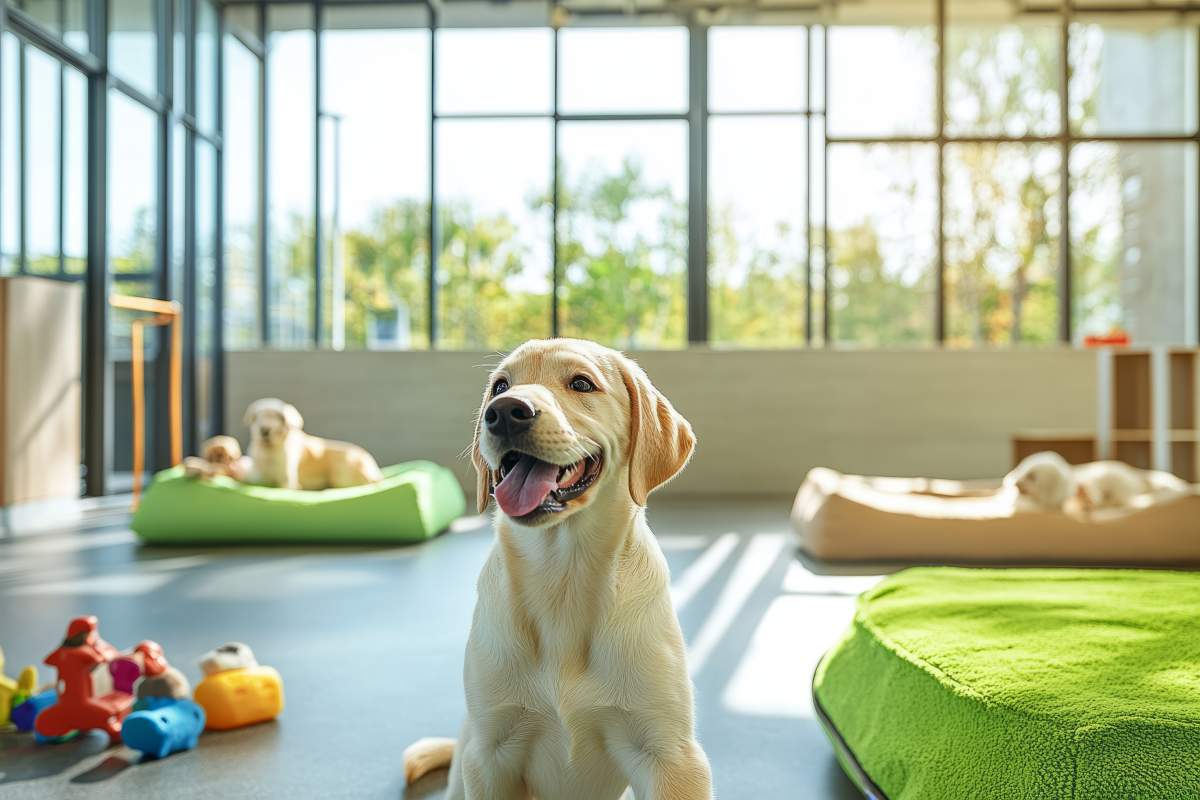
Outdoor space should be evaluated for safety, drainage, shade, fencing, and supervision. Grass or artificial turf is not enough by itself. Look for secure gates, areas that do not become muddy, and surfaces that will not become dangerously hot.
York has hot, humid summers, so ask how the facility adjusts outdoor activity during heat, high humidity, thunderstorms, or poor air quality. Dogs can overheat even when they are not exercising intensely, particularly puppies, older dogs, overweight dogs, and short-nosed breeds.
Ask:
- Are outdoor sessions shortened during hot weather?
- Is fresh water available outside?
- Is shade provided throughout the day?
- Are dogs brought indoors during storms?
- How are paw pads protected from hot surfaces?
- Is there a backup plan for power outages or air-conditioning problems?
A facility should also explain how it handles cold snaps, heavy rain, and slippery conditions. Weather planning matters because boarding schedules often continue through changing conditions.
What medical and emergency procedures matter most?
Ask for specific procedures, not general assurances. The facility should explain how it handles vomiting, diarrhea, coughing, injuries, medication errors, heat stress, and sudden changes in behavior.
Important questions include:
- Who is contacted first if a dog becomes ill?
- When is veterinary care sought?
- Is there an established relationship with an emergency animal hospital?
- Are medications logged when given?
- How are contagious illnesses isolated?
- How are owners updated during an emergency?
- What happens if severe weather or a power outage affects the facility?
In South Carolina, commercial boarding facilities are expected to provide appropriate care, adequate water and food, suitable temperatures, sanitary housing, and emergency veterinary care when necessary. During a tour, these standards should be visible in everyday practices rather than presented as paperwork alone.
What paperwork should you review?
Read the boarding agreement before leaving a deposit or making a reservation. Look for rules about vaccinations, flea and tick prevention, illness, medications, feeding instructions, emergency treatment, pickup times, and unclaimed animals.
Check whether the facility requires current records and whether those records are reviewed before arrival. Ask how staff verify each dog’s identity, belongings, food, and medication.
A clear agreement should explain what happens if your dog becomes sick, cannot participate in group activities, or needs a different housing arrangement. It should also identify who may authorize emergency care when an owner cannot be reached.
What are common touring mistakes?
The most common mistake is focusing only on appearance. A polished lobby does not show how dogs are supervised overnight or during a busy holiday weekend.
Other mistakes include:
- Touring without asking to see rest areas
- Assuming group play is automatically beneficial
- Ignoring strong odors or poor ventilation
- Failing to discuss medication and medical history
- Choosing a facility that cannot accommodate quiet time
- Not asking about heat, storms, or power failures
- Treating a dog’s first visit as the only test
After the tour, write down what was observed while details are fresh. Compare the facility’s routine with your dog’s actual needs, not with the most attractive features shown during the visit.
The best choice is usually the setting with clear procedures, appropriate supervision, clean and secure housing, realistic communication, and a daily routine your dog can handle comfortably.