
 See My Latest Article on HelloNation
Choosing boarding for a dog often raises practical questions: Where does the dog spend the night? How much exercise is provided? Are dogs together all day? What happens if a dog refuses food or becomes anxious?
A typical day at a boarding facility follows a predictable rhythm of rest, bathroom breaks, meals, exercise, enrichment, cleaning, and supervision. The exact schedule varies by facility, dog temperament, age, health needs, and the number of animals staying there, but the basic pattern is usually designed to keep dogs safe, comfortable, and physically settled.
What happens when dogs arrive?
The day usually begins with arrivals, departures, or both. Staff confirm feeding instructions, medications, emergency contacts, behavior information, and any restrictions before the dog joins the boarding routine.
A dog may be assigned to a private space, a kennel area, a small group, or a combination of these arrangements. Boarding facilities commonly separate dogs according to factors such as:
- Size and age
- Play style and energy level
- Temperament and social comfort
- Health status
- Feeding or medication needs
- Whether the dog is accustomed to group activity
A short adjustment period is normal. Some dogs explore immediately, while others remain quiet, pant, pace, or look for familiar scents. These behaviors do not always mean a dog is distressed, but they are signs staff should monitor during the first several hours.
How does the morning routine work?
Morning generally starts with bathroom breaks and a visual health check. Staff look for changes such as coughing, vomiting, diarrhea, limping, unusual fatigue, injuries, or signs of anxiety.
Dogs are then given breakfast according to their individual instructions. Some eat in a private space to prevent food guarding, stealing, or competition. Dogs that eat too quickly may need a slower feeding method, while dogs with sensitive stomachs may be kept on their usual food rather than receiving unfamiliar treats.
Medication, when accepted by the facility and properly labeled, may be given during the morning routine. Instructions typically need to identify the dog, dose, timing, and method of administration. Medications should not be mixed into food unless the dog’s instructions clearly allow it.
After breakfast, many dogs have time to rest. A dog that has traveled, experienced a new environment, or played the previous day may need quiet time before more activity.
Do dogs play together all day?
Usually, no. Responsible boarding schedules balance activity with rest. Continuous group play can lead to overstimulation, exhaustion, conflict, or difficulty settling down.
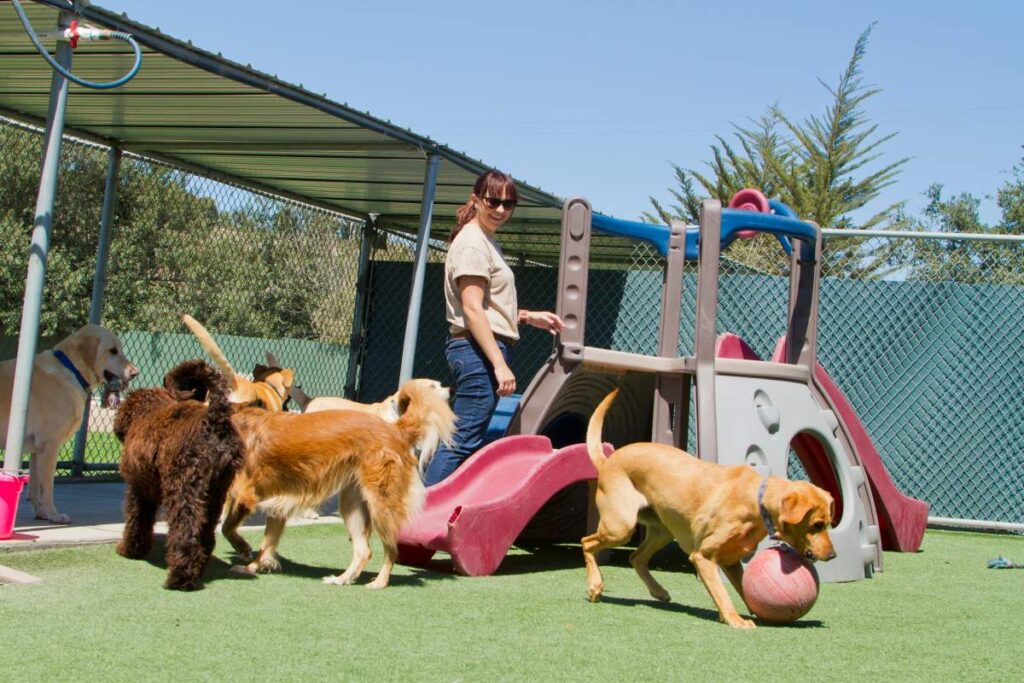
Dogs may receive individual walks, supervised group play, yard time, indoor enrichment, or a combination of these options. Group play is generally managed rather than simply allowing every dog to interact freely. Staff watch body language for signs of comfort, stress, overexcitement, or conflict.
A dog that enjoys social activity may participate in a compatible play group. Another dog may be better suited to individual exercise. Age, physical condition, prior social experience, and behavior history all affect the decision.
Common signs that a dog needs a break include:
- Repeatedly hiding or avoiding other dogs
- Excessive barking or frantic running
- Stiff posture, hard staring, or repeated growling
- Reluctance to return to play
- Persistent panting unrelated to warm weather or exercise
- Difficulty settling after activity
A calm dog is not necessarily having a boring day. For many dogs, quiet time, sniffing, a short walk, and a familiar meal are more beneficial than constant stimulation.
What does an afternoon at a boarding facility include?
Afternoons often include another bathroom break, exercise period, rest, and cleaning. Dogs may be moved between indoor and outdoor areas depending on weather, staffing, facility design, and the dog’s individual needs.
In York, warm and humid conditions during parts of the year can make heat management especially relevant. Dogs may need shorter outdoor sessions, access to shade and water, and additional observation for heavy panting or weakness. During storms, sudden temperature changes, or periods of severe weather, outdoor activity may be reduced or replaced with indoor enrichment.
Indoor activities can include:
- Sniffing games
- Food puzzles approved by the owner
- Short training sessions
- Gentle one-on-one attention
- Chew items that are safe for the individual dog
- Quiet observation or rest in a private area
Cleaning is also a major part of the day. Staff remove waste, refresh water, sanitize surfaces, wash bedding when necessary, and check that gates, latches, crates, and other barriers remain secure. A clean environment reduces odors and helps staff notice health changes more quickly.
What happens at mealtime?
Dinner usually follows the same instructions as breakfast. Feeding schedules may be adjusted for puppies, senior dogs, dogs with medical conditions, or animals that become anxious when left alone.
Some dogs eat normally while boarding. Others eat less during the first day because travel and unfamiliar surroundings affect appetite. A single skipped meal may be monitored, but repeated refusal to eat, vomiting, diarrhea, or marked lethargy deserves closer attention.
Treats should be limited to approved items. Sudden diet changes can cause stomach upset, particularly in dogs that are already unsettled by a new environment. Owners can help by providing clear written instructions and sending the dog’s usual food in measured portions.

What is the nighttime routine?
Evening usually includes a final activity period, bathroom break, water check, and settling routine. Dogs are placed in their assigned sleeping spaces, where staff can observe them and respond if a problem develops.
Some dogs sleep through the night after adjusting. Others whine, bark, pace, or wake periodically. This is more common during the first night, especially for dogs that are not used to sleeping away from home.
Facilities may use staff rounds, monitoring systems, or both. The key issue is not whether every dog sleeps silently, but whether the environment allows staff to identify distress, illness, escape attempts, or unsafe behavior.
Most dogs benefit from bringing familiar food and following their normal schedule as closely as practical. A small blanket or washable item carrying a familiar scent may also help, provided the facility allows personal bedding.
How are health and behavior changes handled?
Boarding staff usually record notable changes in appetite, stool, energy, medication, behavior, and physical condition. Minor variations may simply be documented, while more serious concerns require owner notification and possible veterinary care.
Owners should provide accurate information about:
- Allergies and medical conditions
- Previous injuries or seizures
- Fear triggers
- Separation-related behavior
- Resource guarding
- Bite history or conflicts with other dogs
- Normal eating, drinking, and bathroom habits
A dog’s behavior in boarding may differ from behavior at home. A normally outgoing dog may become withdrawn, while a quiet dog may bark more than usual. These differences help staff decide whether the dog needs less activity, more private time, a different sleeping arrangement, or medical evaluation.
What should York residents ask before boarding?
Before the stay begins, residents should ask how a typical day is structured rather than focusing only on the number of walks or play sessions. Useful questions include:
- Where do dogs sleep?
- How often are bathroom breaks provided?
- Is group play required or optional?
- How are dogs separated by temperament and activity level?
- What happens during extreme heat, storms, or power interruptions?
- How are medications administered?
- What signs trigger an owner notification?
- Who supervises dogs overnight?
- What vaccinations and health records are required?
A clear daily routine, careful supervision, appropriate rest, and accurate instructions matter more than an overly busy schedule. The most comfortable boarding experience is usually one that matches the dog’s normal habits while allowing enough flexibility for age, health, temperament, and the conditions of the day.